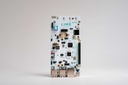
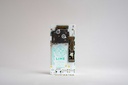
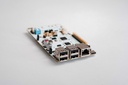
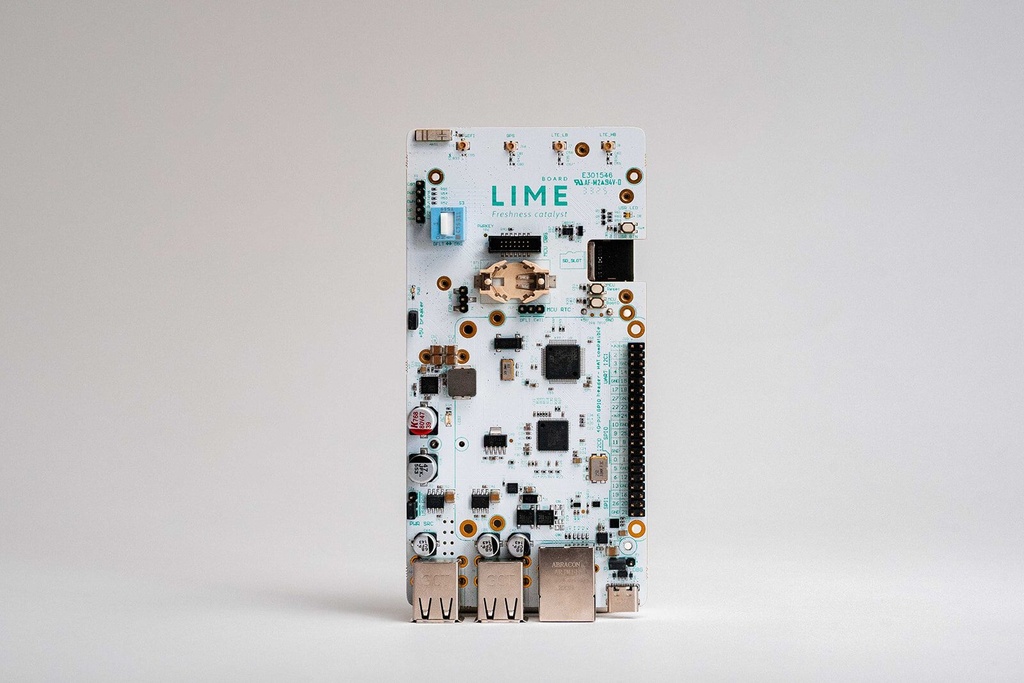
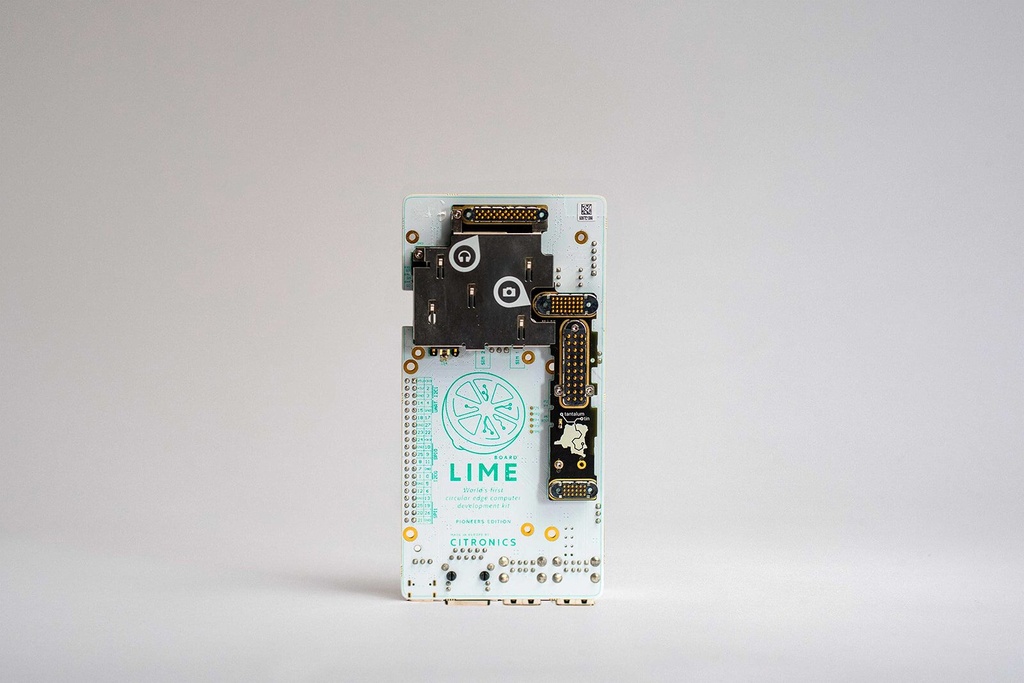
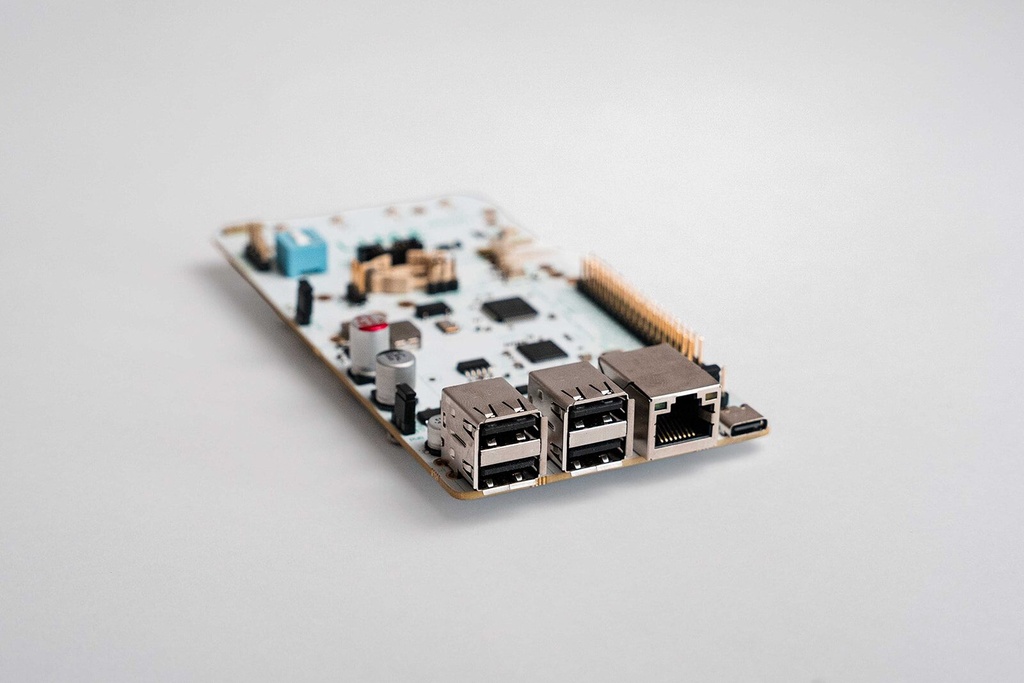
Limeboard is a board you can power up and build on out of the box. It is a development and evaluation kit ready to host your craziest development ideas on circular hardware.
Made for engineers, system architects and researchers to assess with their own workload and their own tools how much of what they build today could run on an embedded computer that already had another life.
Benefits
An embedded platform you can build on
Three questions decide whether a development board earns a place on your bench. Does it speak the interfaces you already use, does what you prove on it survive the move to a product, and can you get more of it next quarter? Limeboard is built to answer all three.
-
Versatile
Standard communication interfaces and a standard software development environment make it the right embedded platform to work through your development backlog.
-
Modular
Built around a CiSoM, the computing and connectivity module you can count on from prototype to mass production.
-
Available
Local stock, reliable supply: enjoy predictable pricing and availability.
Technical specification
Check the technical details
The table to benchmark Limeboard against other equivalent embedded development or prototyping boards.
- Source device
- Fairphone 2 smartphone
- CPU
- Quad-core Qualcomm Krait 400, ARMv7-A compatible, up to 2.26 GHz
- GPU
- Adreno 330, up to 578 MHz. Not initialised in the default configuration
- MCU
- STM32F401 Cortex-M4, up to 84 MHz
- Memory
- 2 GB RAM
- Storage
- 32 GB eMMC + external SD
- Cellular
- 2G, 3G and 4G LTE Cat. 4, dual micro-SIM.Three external antennas required, not included
- Wi-Fi
- 802.11 b/g/n/ac, 2.4 and 5 GHz
- Bluetooth
- 4.0
- GNSS
- GPS with A-GPS.One external antenna required, not included
- Sensors
- Accelerometer, gyroscope, magnetometerSoftware support currently in experimental kernels only
- Ethernet
- 10/100 Mbps
- USB
- 4 x USB 2.03x port with data and power, 1x port with power only
- Expansion
- 40-pin GPIO header, HAT compatible. UART, SPI, I2C, GPIO
- Power
- 5 to 60 V input, typically 2 to 20 W. USB-C Power Delivery and Power over Ethernet
- Dimensions
- 142 x 70 x 24 mm, 95 g
- SoC
- Qualcomm MSM8974
Use-cases
Get inspired by others
Limeboard is used in industry, in teaching labs and in research groups. Check how others use it and get inspired.
-
Prototyping
Many companies ranging from startups to large corporates use Limeboard to assess the performance of circular electronics for their next product.
-
Education
University labs are using Limeboard to train students using and testing circular electronics.
-
Research
Companies and research centers are using Limeboard to explore the new opportunities offered by circular electronics: agentic reverse engineering and legacy systems software support, reliability of repurposed electronics, etc.
Documentation
Available resources you can count on, right away.
Everything needed to work with the board is open source and publicly available. The documentation, the build tooling and the people already using it are all one click away.
-
Wiki
Technical documentation ranging from a quick start guide or a high-level architectural description to detailed design information like pinouts or interface specifications.(opens in a new tab)
-
Development tools
Available tooling supporting your custom development like bootable image generation recipes or Citronics kernels.(opens in a new tab)
-
Community
Meet and interact with other, experienced users on our Discord server.(opens in a new tab)
Limitations
- Shipped in the EU only
- Known issues and limitations detailed here(opens in a new tab)
- Limeboard must be used as a custom-built evaluation kit destined for professionals used for R&D purposes in compliance with RED (see RED guide(opens in a new tab)). Reach out for deployment-ready boards and products.